How Social Media & AI Shape the Pet Care Trends Owners Try
If outside the area, please call your nearest emergency vet.

Pet-care advice is all over social media, from raw-food recipes to calming chews and viral challenges, and most owners have tried something they saw there. In a survey of 1,025 U.S. dog and cat owners, we asked what they tried, who they trusted, and what happened next. For most pets, nothing went wrong. For some, a trend ended at the vet.
Key takeaways
- Nearly 8 in 10 pet owners (77%) have tried a pet-care trend they saw on social media.
- More pet owners check a trend with an AI chatbot than with a vet (24% versus 23%).
- Nearly 1 in 5 owners (18%) have tried a trend on their pet without checking if it was safe first.
- Nearly 1 in 7 pet owners (14%) trust a social media influencer’s pet advice more than their own vet.
- About 1 in 8 pet owners (13%) have ended up at the vet after trying a social media trend, at an average cost of $176.
- 6% of pet owners have tried a social media trend that hurt their pet’s health or well-being.
- 5% of pet owners put off or skipped a vet visit because of something they saw on social media.
Social media is a top source of pet-care advice
When owners look for pet-care ideas, many start with a feed rather than a phone call.
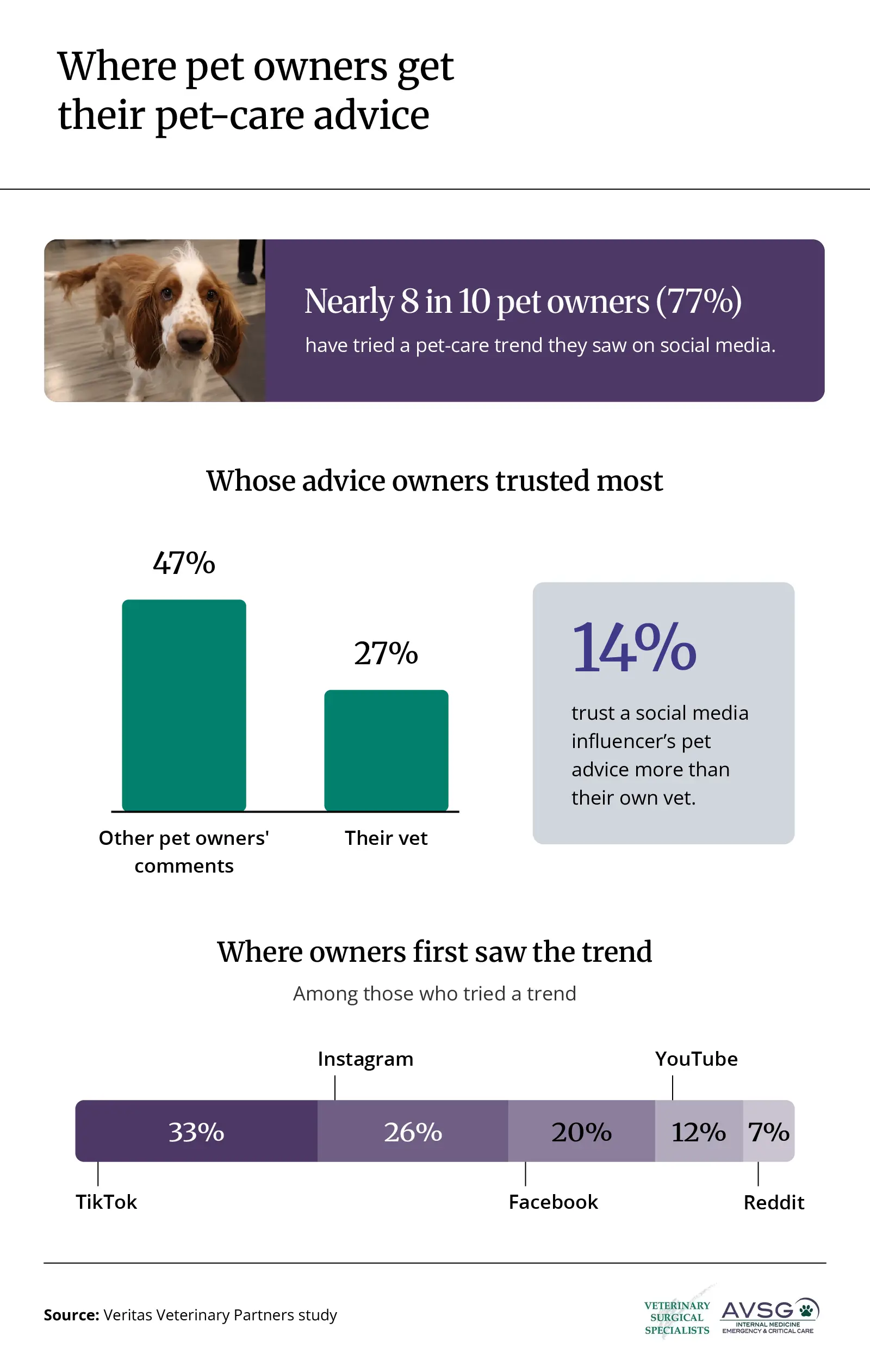
Nearly eight in 10 pet owners (77%) had tried a pet-care trend they saw on social media, and many weighed the crowd over the clinic. Nearly 1 in 7 (14%) said they trust a social media influencer's pet advice more than their own vet, a figure that rose to 16% among women versus 10% of men.
When deciding whether to try a trend, owners leaned most on comments from other pet owners, the everyday replies under a post rather than the creator who shared it, and those comments outweighed their own vet, 47% to 27%.
The habit skewed younger and female. Women were more likely than men to try a trend (81% versus 71%), and trying one fell steadily with age, from 83% of Gen Z to 78% of millennials, 74% of Gen X and 54% of baby boomers.
When a trend ends at the vet
Most trends do no harm, but a share of pets end up needing care.
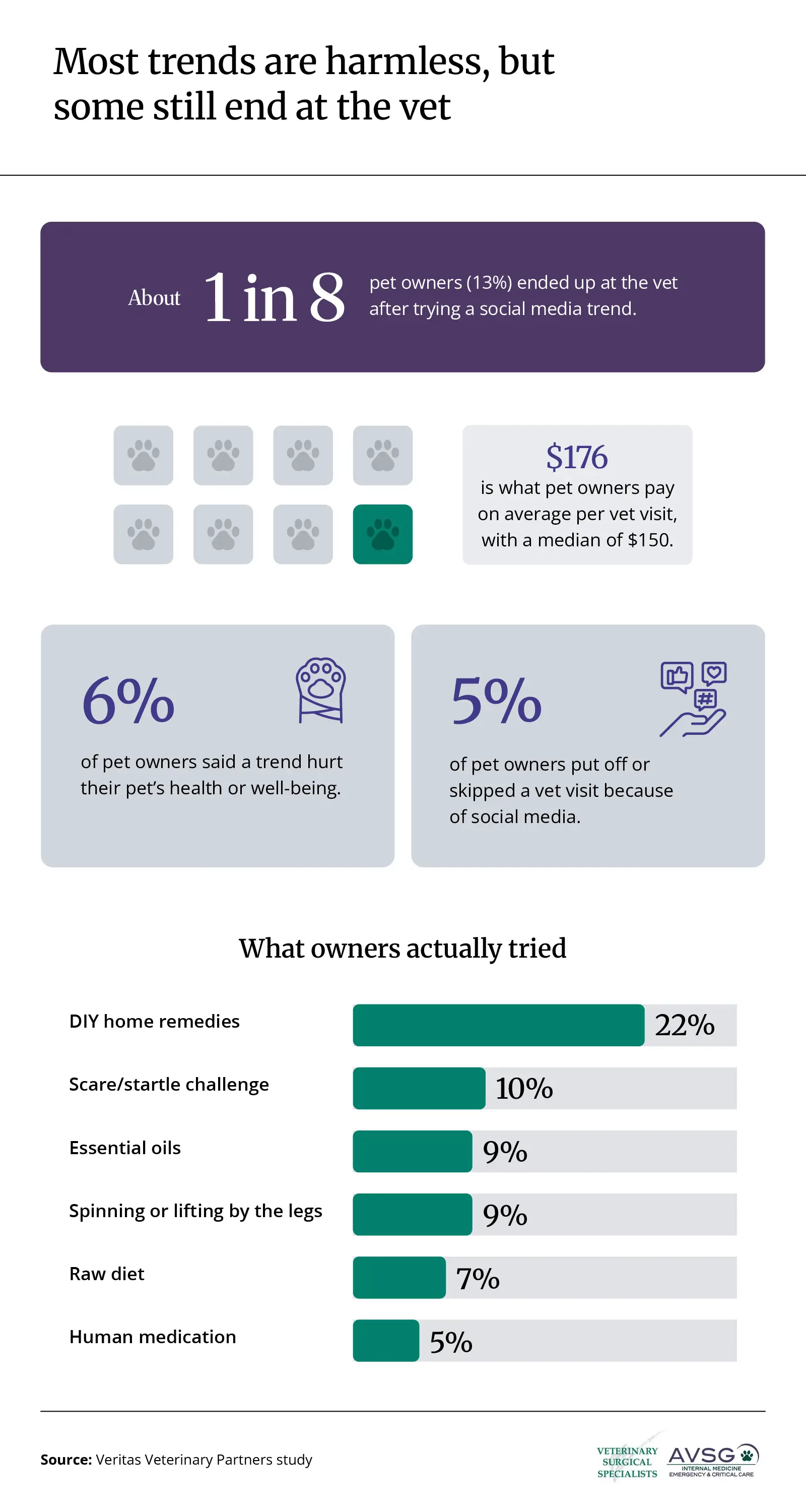
About one in eight pet owners (13%) ended up at the vet after trying a social media trend, at an average cost of $176. Six percent of all pet owners said a trend hurt their pet's health or well-being, and 5% put off or skipped a vet visit because of something they saw on social media.
The trends owners tried ranged from DIY home remedies and essential oils to raw diets and human medications they saw online. Even so, most pets came through fine: among those who tried a trend, 53% of owners saw no change and 44% saw an improvement. Men who tried a trend were more likely than women to end up at the vet afterward (22% versus 15%).
Few owners check with a vet first
Many owners act on a trend without a second opinion, and the ones who do check often ask a chatbot before a clinician.
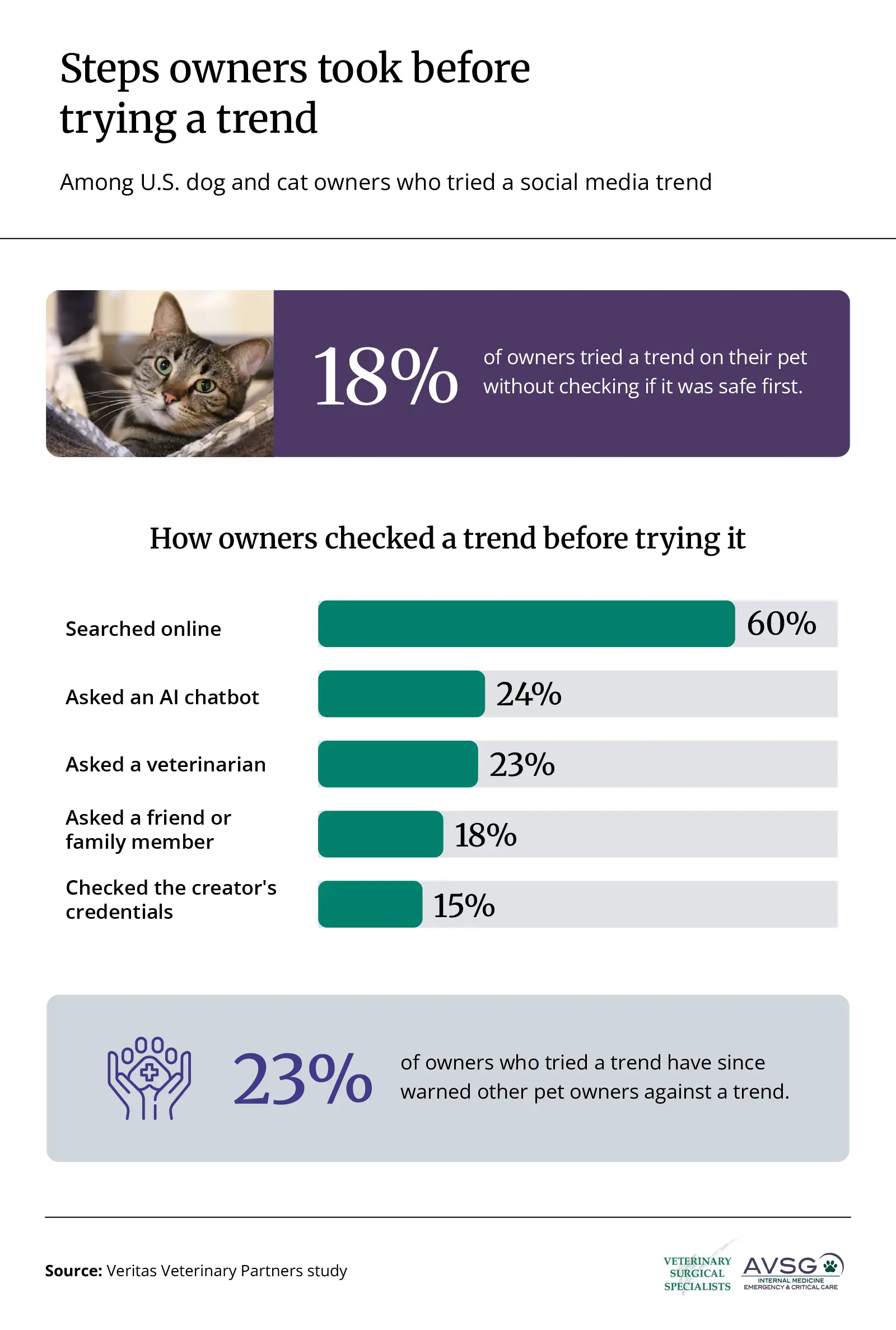
More pet owners checked a trend with an AI chatbot than with a vet (24% versus 23%), and chatbot use climbed with age, from 19% of Gen Z to 23% of millennials and 28% of Gen X. Nearly one in five owners (18%) tried a trend on their pet without checking whether it was safe at all.
The owners who steered clear of trends tended to trust a professional instead. Among those who avoided social media pet trends, 54% said they relied on their primary care vet, and nearly a third (30%) said they worried a trend could hurt their pet.
What this means for pet owners
Social media is now part of how pets are cared for, and most of what owners try does no harm. But when owners follow a trend without checking or lean on a feed over a professional, the pet carries the risk. If something changes in your pet after a trend, it might be best to start with your primary care vet rather than the next post.
Methodology
For this study, we surveyed 1,025 American dog and cat owners about the pet-care trends they tried after seeing them on social media, who they trusted, and how search engines, AI chatbots, and social media platforms shaped their decisions. Respondents were screened to include only those who currently own a dog, cat, or both; 24% were Gen Z, 50% millennials, 20% Gen X, and 6% baby boomer and the gender split was 37% men and 61% women, with the remaining 3% nonbinary, preferring not to say, or other. Percentages are rounded, and some questions allowed more than one answer, so totals may not add to 100%.
Veterinary Surgical Specialists of Orange County
Veterinary Surgical Specialists of Orange County provides specialty veterinary care for southern California pets and beyond. Our board-certified specialists handle the surgical cases that require specialized care.
Fair use statement
This content is free to share for noncommercial purposes. We just ask that you credit Veterinary Surgical Specialists of Orange County and link back to this page when doing so.
The information contained in the article is for informational purposes only and is not intended to take the place of the advice of a veterinarian.